How to introduce common allergy causing foods
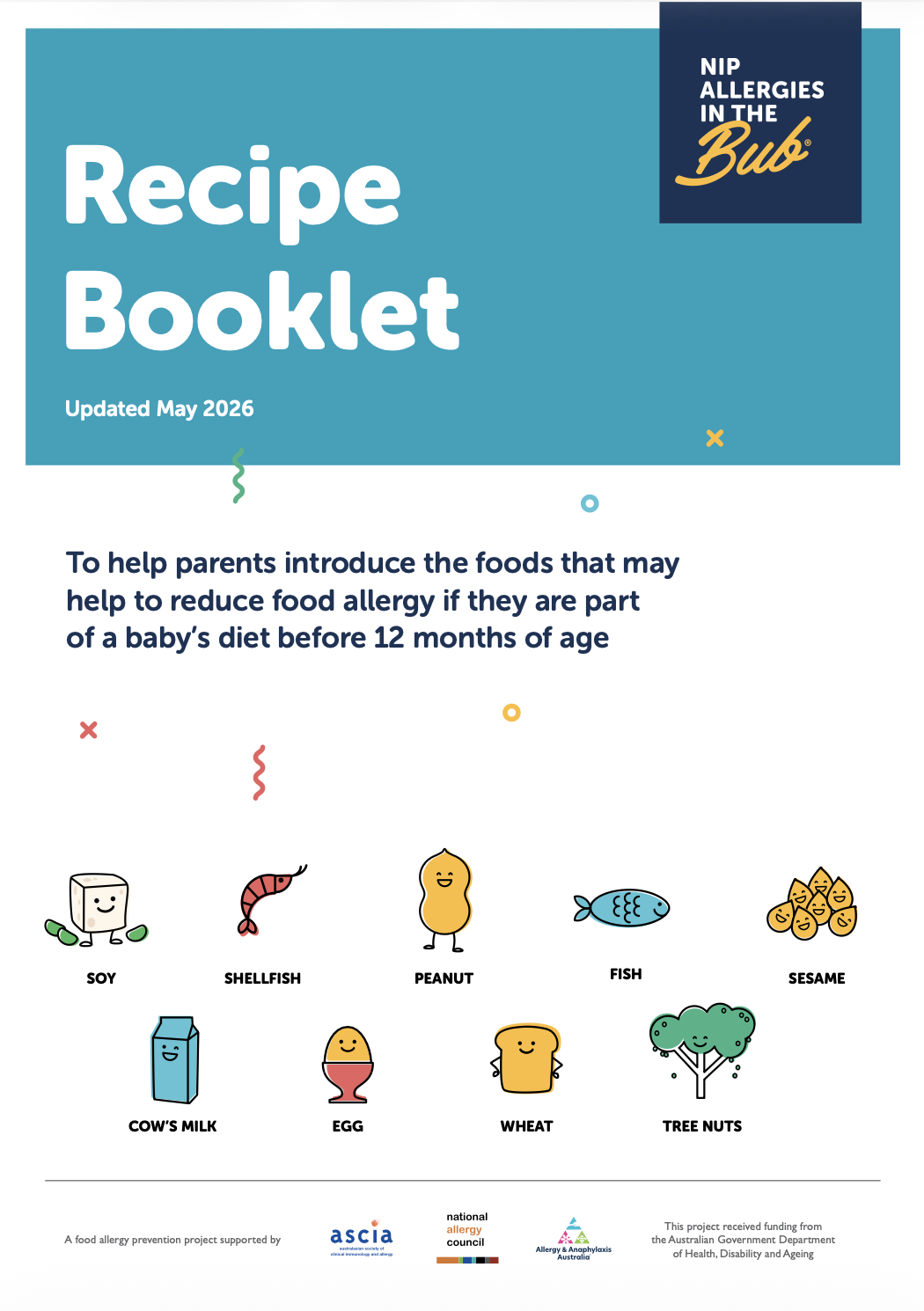
The common allergy causing foods should be included in the foods you offer your baby before they are one year of age. Common allergy causing foods include:
Common allergy causing foods
Lupin is not a common allergy causing food in Australia which is why it has not been included in the food allergy prevention guidelines.
Introduce one new allergy causing food at a time (such as one new food at each meal) so that if your baby has an allergic reaction, it is easier to work out which food is likely to be the problem food.
Note: Children under 5 years of age should only be given peanuts or tree nuts as a smooth nut butter or paste or as nuts ground up to be a powder or flour.

Egg

Cow’s Milk

Wheat
Soy

Peanut

Tree nuts

Fish

Shellfish

Sesame
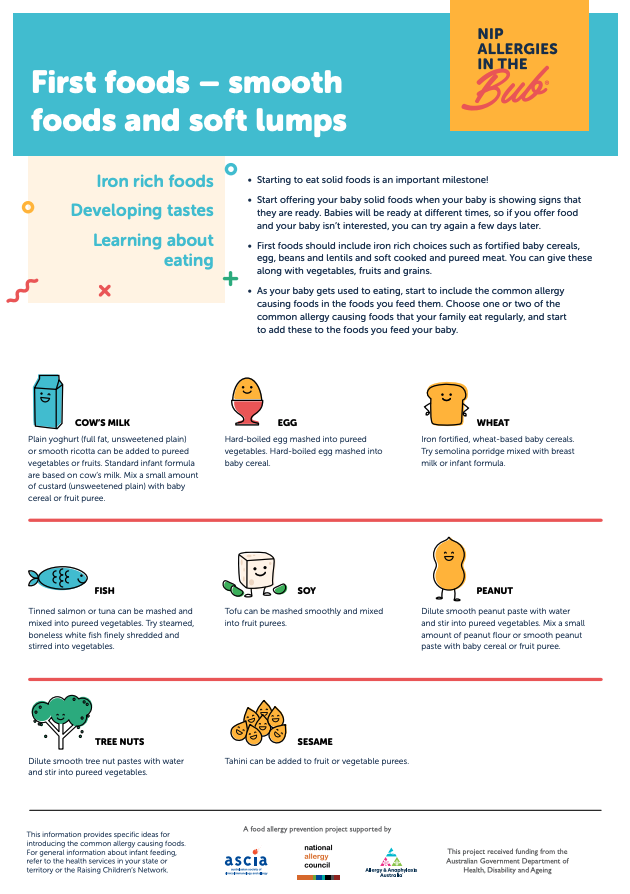
Once your baby shows signs they are ready for solid foods, it is important to introduce foods to support your baby’s nutrition needs. Foods containing iron (such as iron enriched cereals, meats, poultry, fish, well cooked egg, tofu and legumes) should be included from around 6 months of age.
It is also important to offer your baby the common allergy causing foods before one year of age to help prevent food allergies. If possible, continue to breastfeed while you introduce solid foods to your baby. If breastfeeding is not possible, a standard cow’s milk-based infant formula can be given.
Once your baby has started to eat the common allergy causing foods, it is important to continue to include these foods in your baby’s meals at least once a week.
How do you introduce the common allergy causing foods?
Offer your baby the common allergy causing foods one at a time (such as one new food at each meal). By introducing only one common allergy causing food at each meal, it will make it easier to identify the problem food if an allergic reaction occurs.
When offering a new food to your baby, it is best to do so soon after your baby wakes and not just before putting them down for a sleep. This will allow you to watch for any signs of an allergic reaction.
Offer your baby the common allergy causing foods that your family regularly eats.
Once your baby has started eating the common allergy causing foods, it is important to continue to include these foods in your baby’s meals at least once a week.
If you are worried about giving your baby an allergy causing food, you can place a small amount of the food on the inside of their lip to start. Never rub food on your baby’s skin, especially in babies with eczema, as this may increase the chance of your baby developing a food allergy.
Only avoid foods that you think your baby has had an allergic reaction to. If an allergic reaction occurs, you should stop feeding your baby that food and see your doctor for medical advice.
View food ideas and recipes to help keep the allergy causing foods in your baby’s diet.
Packaged foods for babies that contain most of the common allergy causing foods are now commercially available. While these products might appear to be convenient for introducing the common allergy causing foods, there are many benefits to offering babies the actual food rather than commercially prepared options. ASCIA recommends offering babies a variety of foods, as part of family meals to provide a nutritious and diverse diet. Using commercial allergen introduction products may be unnecessary and costly if the common allergy causing foods are regularly included in family meals.
What about feeding my baby peanut and egg?
Parents are sometimes worried about offering egg and peanut to their babies, as these are common food allergies.
To help prevent food allergy, it is important to offer your baby well cooked egg (not raw or runny egg) and smooth peanut butter or paste soon after your baby starts eating solid foods, as delaying the introduction of these foods increases the chance of developing allergies to these foods.
Once your baby is eating peanut and egg, you should continue to offer these at least once a week.
Offering the common allergy causing foods to your baby when you can watch for any signs of an allergic reaction is important. For example, offering well cooked egg and smooth peanut butter or paste soon after your baby wakes, allows you to watch your baby and quickly respond if they show signs of an allergic reaction.
How to introduce peanut and egg to your baby
Introduce well cooked egg and smooth peanut butter or paste in small amounts to start with.
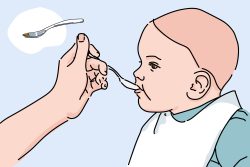
For example, mix a small amount (about a quarter of a teaspoon) of hard-boiled egg or peanut butter/paste into your baby’s usual food, such as vegetable puree.
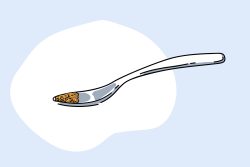
If your baby does not have any signs or symptoms of an allergic reaction, increase the amount next time to about half a teaspoon, and then gradually increase the amount you offer according to how much your baby wants to eat.
Never smear or rub food on your baby’s skin, especially if they have eczema. This will not help to identify possible food allergies and may cause skin irritation and possibly contribute to your child developing a food allergy, as the food was introduced through the skin and not the mouth.
If you are worried, you can place a small amount of the food inside your baby’s lip when you give the food for the first time. If there is no allergic reaction after a few minutes, you can start giving small amounts of the food as explained above.
How much of the allergy causing foods should I offer my baby?
There is no clear research about how much of the common allergy causing foods your baby needs to eat to prevent food allergy, so it is recommended that you start with a small amount. Start with a quarter of a teaspoon and increase the amount as your baby grows and eats more.
Once your baby has eaten a common allergy causing food, continue to include this in your baby’s meals at least once a week.
What about the texture of food?
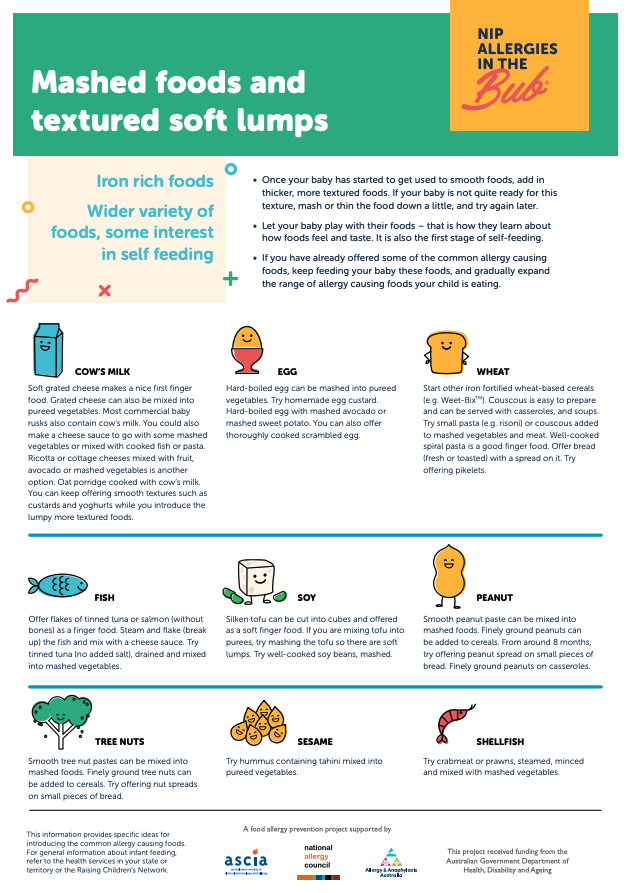
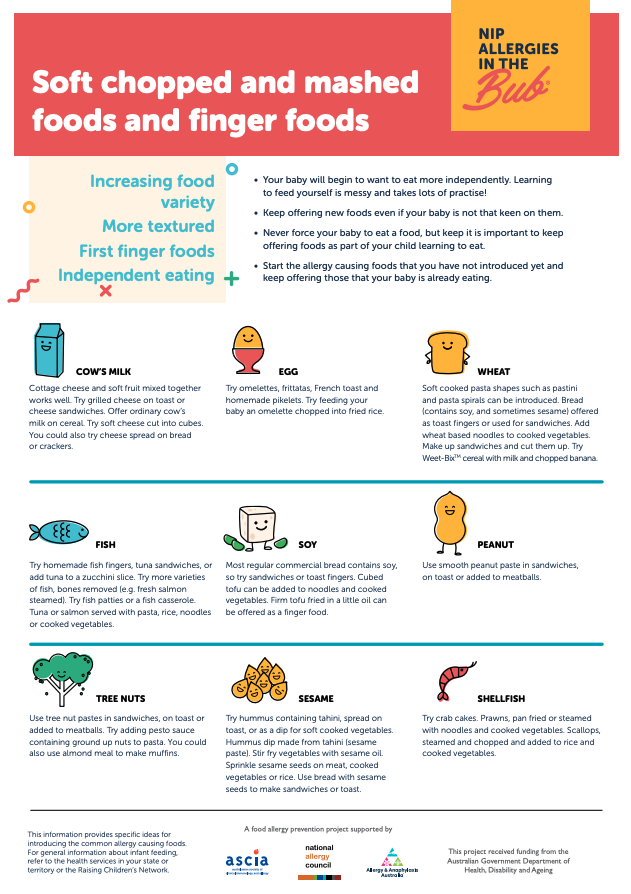
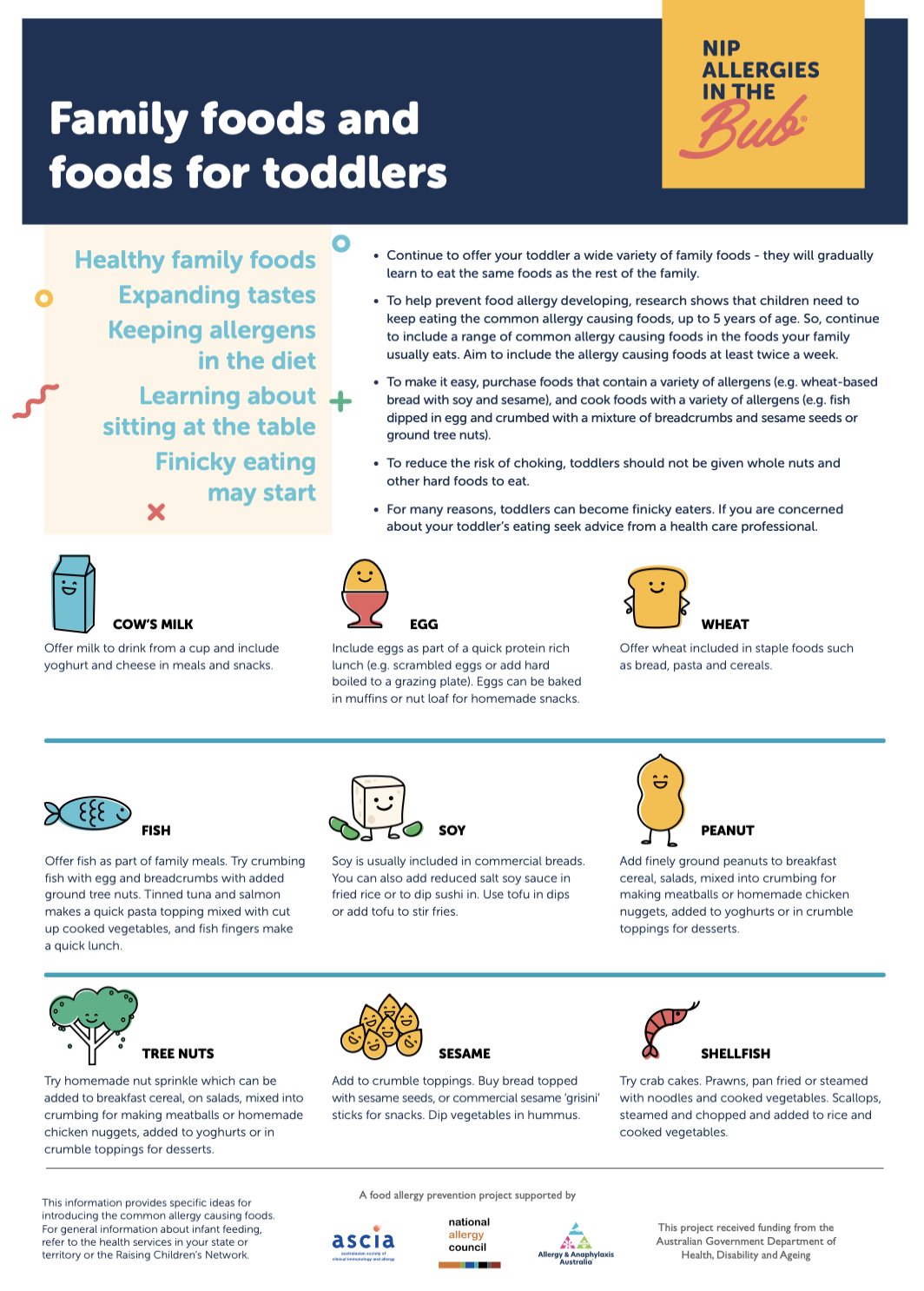
Your baby needs to learn about different textures of food as they develop. Start with smooth foods and then quickly move to soft lumpy foods and finger foods, allowing your baby to eat the foods in the same way as the rest of the family.
Children under 5 years of age should only be given peanuts or tree nuts as a smooth nut butter or paste or as nuts ground up to be a powder or flour.
View more information including food ideas and recipes.
What if my baby is allergic to a food?
If your baby has had what could be an allergic reaction or is allergic to a particular food, do not feed your baby that food until you have seen a doctor.
You should continue to introduce and offer your baby the other common allergy causing foods.
Learn more about allergic reactions and what to do.
What if our family does not eat a particular common allergy causing food?
Research shows that it is important for your baby to continue eating the common allergy causing foods once introduced, as not eating them at least once a week, may result in them developing an allergy to the food. Therefore, you should only offer them the foods that you are able to continue to offer them.
Your baby will eventually be eating family foods, so if your family does not eat a common allergy causing food, you may choose not to introduce that food to your baby. You may wish to discuss this with your doctor or an allergy dietitian.
How often should I offer my baby allergy causing foods once introduced?
Once your baby has eaten the common allergy causing foods, it is important to continue to include these foods in your baby’s meals, ideally at least once a week. This is important to help prevent your baby possibly developing an allergy. Research shows that offering the allergy causing foods and then not continuing to eat those foods could result in your baby developing an allergy to the food if they have not eaten the food for some time. There is no clear research about how long you should continue to include these foods in your baby’s meals, so it is recommended that you introduce foods that are likely to continue to be eaten by your family.
There is no clear research to tell us exactly how much of the allergy causing foods your baby needs to keep eating to prevent food allergy. It is recommended that once you have introduced the food, continue to include 1 teaspoon of that food in your baby’s meals at least once a week to start with and increase the amount as your baby grows and eats more. Remember – if you think your child has had an allergic reaction to a food, stop feeding them the food and seek medical advice.
As it is important to continue to include the common allergy causing foods in your baby’s diet once started, you should only offer them the foods that you can continue to give them. Your baby will eventually be eating family foods, so if your family does not eat a common allergy causing food, you may choose not to offer that food to your baby, knowing that they are not likely to continue eating it once they are able to eat family meals. You may wish to discuss this with your doctor or an allergy dietitian.
For example, once your baby has started eating well-cooked egg, you should include well-cooked (not raw or runny) egg in your baby’s food at least once a week.
For a younger baby around 6 months of age, this may mean including well-cooked egg blended in a food such as pureed vegetables, that they normally eat.
For older babies on more textured food (around 7-9 months), you might offer your baby scrambled egg or mash a hard boiled egg together with mashed potato.
Once your baby is eating finger foods (around 12-18 months), you can include egg in many foods such as muffins, pikelets or a chopped up omelette in fried rice.
The important thing is to include the food in the texture that your baby is managing, in your baby’s meals at least once a week.
If your baby has had what could be an allergic reaction or is allergic to a particular food, do not feed your baby that food. Consult a doctor if you think your child has had an allergic reaction.
Recipes for your baby
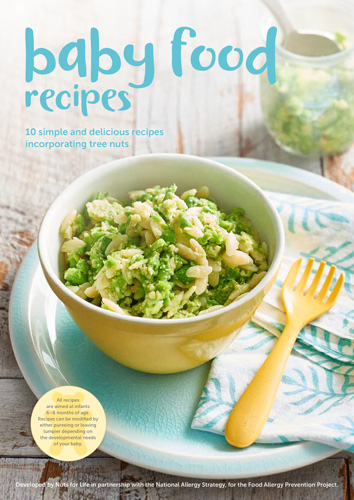
Looking for ideas to help you to feed your baby the common allergy causing foods? Download these food ideas and recipe booklets: