Top tips for managing eczema

Moisturise every day, even when there is no eczema

In people with eczema the skin barrier does not work as well and moisture is easily lost from the skin causing it to be dry and itchy.
The following hints and tips will help to manage your child’s eczema.
Medicated creams and ointments and moisturisers
- Wash your hands before putting on medicated creams and ointments and moisturiser.
- Moisturise every day, even when there is no eczema.
- Use prescribed creams or ointments (such as topical steroids) as directed by your doctor or nurse practitioner.
How much moisturiser should I be using?
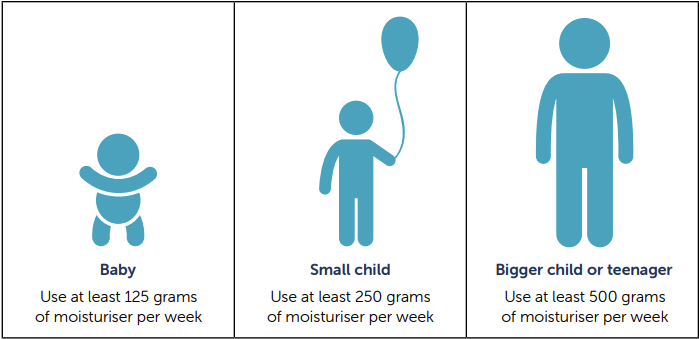
Probably more than you think! Try to use the following amounts each week:
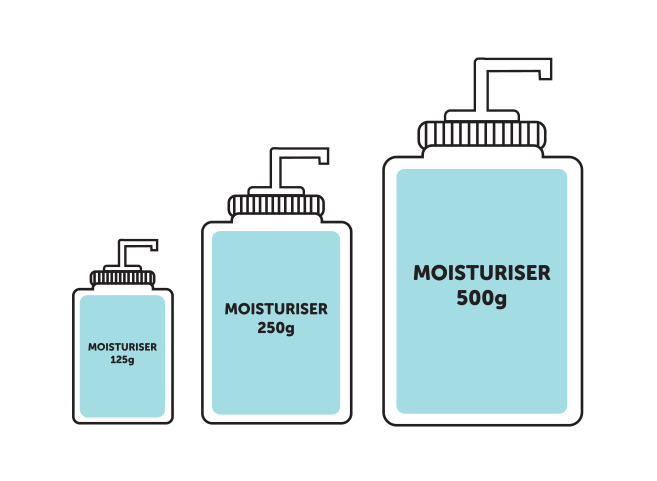
- 125g for a baby
- 250g for a small child
- 500g for a bigger child or teenager
Bathing
- Bath or shower once a day where possible.
- Gently remove any eczema crusts while in the bath – this will allow the prescribed creams/ointments to work better.
- Do not use soap products and bubble bath as they dry the skin.
- Also, stay away from products which contain perfume or fragrance as they can irritate the skin.
- Use a shampoo for sensitive skin when washing hair.
Triggers
- Avoid overheating – children with eczema get hot quickly and this can make eczema more itchy.
- Try not to overdress children – 100% cotton clothing is preferred.
- Avoid heavy blankets and quilts on the bed – soft cotton or silk sheets are recommended and a thin cotton blanket or a lightweight sleeping bag in cooler weather.
- Do not have heaters in bedrooms where possible.
- Keep fingernails short and clean – this can help stop damage to skin from scratching.
- Remove prickly materials such as clothing tags if the child’s skin is affected by them.
When and where should I use cortisone creams and ointments?
Apply cortisone (as prescribed) to the skin as soon as you see any areas of eczema (red, inflamed, rough areas), and apply it to all the areas with eczema, not just the worst bits. It should also be used on broken skin.
How much do I use?
It can be hard to know how much cream or ointment to apply to an area. If you apply too little, it may not work.
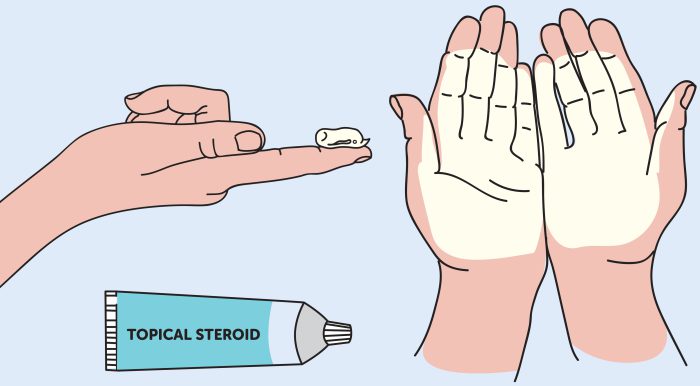
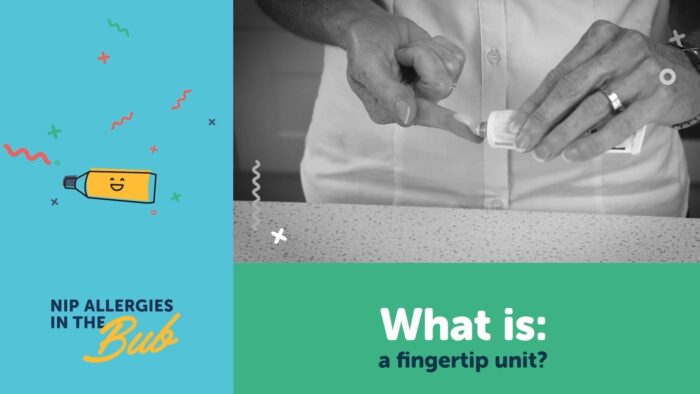
Apply enough cortisone cream or ointment to cover all the areas with eczema. Fingertip unit amounts can help. One fingertip of cream is enough to cover an area of skin about the size of two adult hands placed flat with the fingers together. For example, if the area of skin to be treated is the size of four flat adult hands, two fingertip units of cream or ointment should be applied each time.
Once a day is often enough. Continue applying once a day until the eczema has completely gone (the skin is smooth, not red and not itchy), or as advised by your treating health professional. If treated correctly, the eczema should clear within 1-2 weeks, in most cases.
Managing eczema flares?
Eczema can flare even when your baby’s eczema is being well managed. When your baby’s eczema flares, apply cortisone (as prescribed) to the skin as soon as you see any areas of eczema (red, inflamed, rough areas), and apply it to all the areas with eczema, not just the worst bits. It should also be used on broken skin.
Apply enough cortisone cream or ointment to cover all the areas with eczema. Continue applying once a day until the eczema has completely gone (the skin is smooth, not red and not itchy), or as advised by your treating health professional. If treated correctly, the eczema should clear within 1-2 weeks, in most cases.
Your doctor or nurse practitioner may have recommended using bleach baths or wet dressings to help manage an eczema flare and you should follow the advice of your baby’s doctor or nurse practitioner.
If the eczema does not clear within 1-2 weeks of using the cortisone cream or ointment, make an appointment to see your doctor or nurse practitioner.